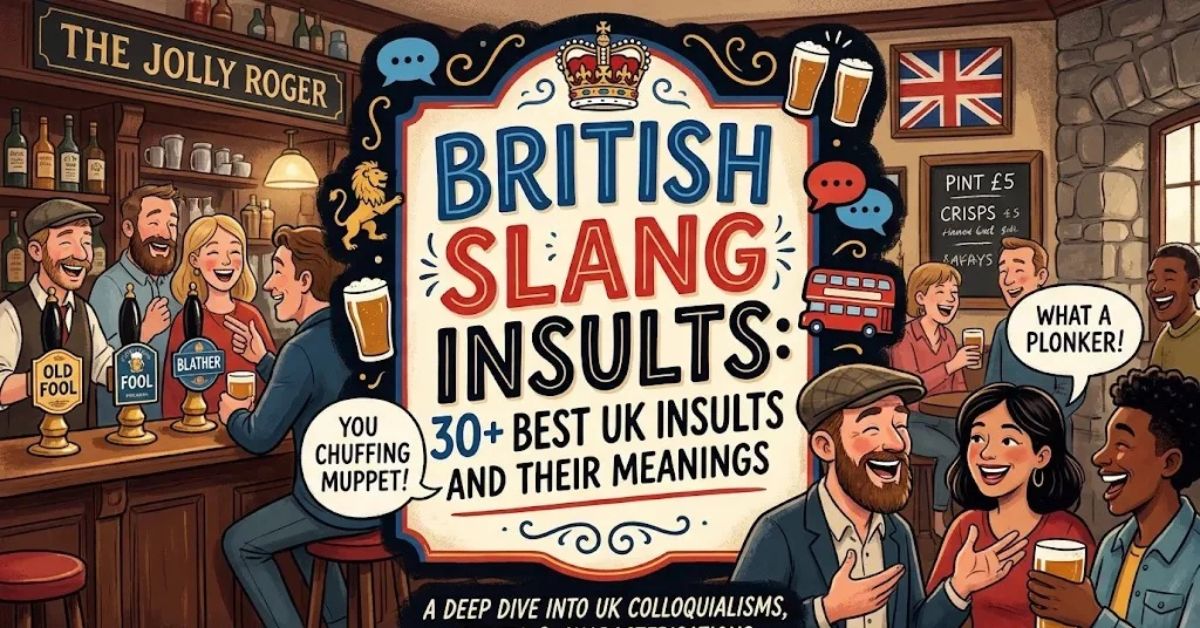
British Slang Insults: 30+ Best UK Insults and Their Meanings
British slang insults are famous for their creativity, humor, and unmistakable personality. From calling someone a “plonker” to telling them to “wind their neck in,” British people have developed a unique way of expressing annoyance, teasing friends, and delivering clever comebacks.
Unlike many insults in American English, British slang often relies on humor, sarcasm, and playful exaggeration. Some words sound harsh but are commonly used between friends. Others carry a stronger meaning and can easily offend someone when used in the wrong situation.
Whether you’re learning British English, watching UK television, exploring British culture, or simply looking for funny insults to use with friends, understanding these expressions can make conversations much more entertaining.
In this guide, you’ll discover more than 30 classic, modern, funny, and savage British slang insults, along with their meanings and examples.
Classic British Insults That Never Get Old
Some British insults have been around for generations. They remain popular because they’re easy to understand, memorable, and often funny without being particularly offensive.
1. Plonker
A plonker is someone who behaves foolishly or makes a ridiculous mistake. It’s one of the most recognizable British insults, especially among fans of the sitcom Only Fools and Horses.
Example: “You left your phone in the fridge again, you absolute plonker!”
2. Prat
Prat describes someone acting stupid, foolish, or irritating. It’s a relatively mild insult that works well in casual conversations.
Example: “Stop acting like a prat and listen for once.”
3. Git
A git is an unpleasant, annoying, or foolish person. Depending on the situation, it can sound genuinely insulting or surprisingly affectionate.
Example: “He’s a grumpy old git, but everyone loves him.”
4. Muppet
Calling someone a muppet means they’re behaving foolishly or making an obvious mistake. It’s a playful insult that became especially popular through British entertainment.
Example: “You booked the wrong train ticket? What a muppet!”
5. Numpty
Numpty is a Scottish-origin insult used throughout Britain to describe someone acting silly or lacking common sense.
Example: “I walked into the wrong classroom. I’m such a numpty.”
6. Pillock
A pillock is someone who behaves like an idiot or makes foolish decisions. It’s a classic British word that sounds particularly entertaining when spoken aloud.
Example: “Only a pillock would try to drive with an empty tank.”
7. Tosser
A tosser is an unpleasant, obnoxious, or irritating person. It’s stronger than words like prat or muppet and is generally less appropriate in polite conversations.
Example: “That guy pushed everyone out of the way. What a tosser.”
British Insults Americans Often Find Funny
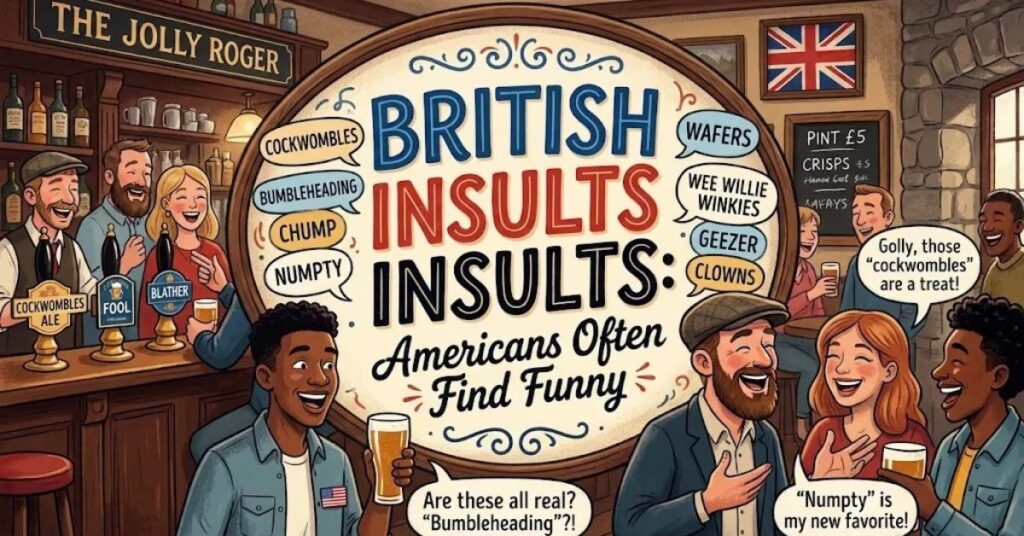
British slang has become increasingly popular in the United States through social media, reality television, comedy, and online creators. Some expressions sound especially unusual or entertaining to American audiences.
8. Melt
A melt describes someone who appears overly emotional, weak-willed, or easily manipulated, particularly in romantic situations.
The expression became widely recognizable through British reality television, including Love Island.
Example: “She keeps ignoring him, and he still buys her gifts. What an absolute melt.”
9. Donkey
Calling someone a donkey suggests they’re being foolish, stubborn, or unintelligent. It’s similar to calling someone an idiot or an ass.
Example: “You knew the road was closed and still drove down it. You donkey!”
10. Mug
A mug is someone who is easily fooled, taken advantage of, or made to look foolish.
The expression “mugged off” means being treated disrespectfully or being made a fool of.
Example: “He paid for everyone’s dinner and got nothing in return. He’s been completely mugged off.”
11. Wind Your Neck In
This expression means calm down, stop interfering, or mind your own business. It’s a humorous but direct way to tell someone to back off.
Example: “You weren’t even involved in the argument, so wind your neck in.”
12. Bang Out of Order
Something that’s bang out of order is completely unacceptable, unfair, or disrespectful.
Example: “Making fun of someone in front of their friends is bang out of order.”
13. Bollocks
Bollocks is one of Britain’s most versatile swear words. It can mean nonsense, stupidity, or something that’s gone badly wrong.
Common expressions include:
- “That’s bollocks!” – That’s nonsense.
- “It’s all gone bollocks.” – Everything has gone wrong.
- “You scared the bollocks out of me!” – You frightened me badly.
- “The dog’s bollocks” – Something exceptionally good.
Although widely used in informal British English, it’s still considered vulgar.
Modern and Creative British Slang Insults
British humor often involves unusual words, unexpected comparisons, and insults that sound completely random. These expressions can be particularly entertaining because their meanings depend heavily on context.
14. Weapon
Calling someone a weapon means they’re behaving ridiculously, making poor decisions, or causing unnecessary problems.
Example: “He tried to microwave a metal spoon. What a weapon.”
15. Length
Length is an unusual insult that can be used to describe someone as irritating, ridiculous, or unpleasant.
Example: “You’re being a complete length. Just leave it alone.”
It’s a more obscure expression, so not everyone will recognize it.
16. Dishcloth
Dishcloth can be used as a humorous insult suggesting someone is weak, useless, or unimpressive.
Example: “You couldn’t even open the jar. Absolute dishcloth.”
17. Quilt
Quilt is another unusual object-based insult sometimes used in humorous British banter.
Example: “Look at that quilt trying to act tough.”
Like length and dishcloth, this is not a universally recognized British insult.
18. Parcel
Calling someone a parcel can be a playful way of suggesting they’re useless, awkward, or ridiculous.
Example: “You forgot the entire shopping list. Absolute parcel.”
19. Dry Lunch
A dry lunch describes someone who’s boring, dull, or lacking personality.
Example: “He’s a proper dry lunch. Nobody wants to listen to his stories.”
20. Pothole
Pothole is an unconventional insult that can suggest someone is annoying, inconvenient, or constantly getting in the way.
Example: “Move out of the doorway, you pothole.”
These creative expressions are often regional or internet-driven rather than standard British slang. Their meanings can vary between groups.
Old-Fashioned British Insults Worth Knowing
Some traditional British insults have become less common in everyday conversations, but they still appear in books, television shows, comedy, and historical writing.
21. Lummox
A lummox is a clumsy, awkward, or foolish person.
Example: “You knocked over every chair in the room, you great lummox.”
22. Bampot
Bampot is a Scottish insult describing someone who’s foolish, eccentric, or behaving like a complete nuisance.
Example: “He’s arguing with a parking meter. What a bampot.”
23. Blighter
A blighter is someone considered annoying, troublesome, or unpleasant. It often sounds old-fashioned or theatrical.
Example: “That blighter took the last biscuit.”
24. Ninny
A ninny is a foolish or silly person. It’s a relatively mild insult that sounds more humorous than aggressive.
Example: “Don’t be such a ninny. It’s only a little rain.”
25. Cad
A cad is a dishonest, selfish, or dishonorable man, particularly someone who behaves badly toward others.
Example: “He promised to help her and disappeared. What a cad.”
26. Tosspot
A tosspot traditionally refers to a drunkard or someone who drinks excessively. Today, it’s mostly associated with older-fashioned British humor.
Example: “The old tosspot spent the afternoon drinking at the pub.”
27. Toe Rag
A toe rag is a contemptible, unpleasant, or worthless person. It’s a particularly colorful insult with an old-fashioned British feel.
Example: “That toe rag stole my bicycle.”
28. Nitwit
A nitwit is someone who’s foolish or lacking common sense.
Example: “You put salt in your coffee instead of sugar, you nitwit.”
29. Scallywag
A scallywag is a mischievous troublemaker, often someone who behaves badly in a playful or cheeky way.
Example: “Those little scallywags covered the garden in mud.”
30. Wazzock
Wazzock is a distinctly British insult meaning a foolish, ridiculous, or annoying person.
Example: “You wazzock! The meeting starts in five minutes.”
Savage and Elaborate British Insults
Sometimes British insults go beyond a single word. Instead, they use exaggerated comparisons, sarcasm, and imaginative descriptions to deliver a memorable comeback.
31. You’ve Got a Face Like a Bag of Smashed Crabs
This expression is an exaggerated insult about someone’s appearance. It’s deliberately absurd and meant to sound brutally funny.
32. You’ve Got a Face Like a Bulldog Chewing a Wasp
This classic British expression describes an unpleasant or awkward facial expression, often suggesting someone looks particularly unattractive or angry.
33. You’re a Sandwich Short of a Picnic
This means someone isn’t particularly intelligent or is missing a bit of common sense.
Example: “He tried to charge his laptop in the microwave. He’s a sandwich short of a picnic.”
34. Yer Da Sells Avon
This Scottish-style insult translates roughly to “Your dad sells Avon.”
The joke is that someone’s father is being portrayed as unimpressive or lacking toughness. Avon is a cosmetics and beauty products company, making the comparison part of the humor.
35. Yer Da Sits at the Top of the Stairs and Pretends He’s the Chaser
This is an absurd, highly specific insult suggesting someone’s father is lonely or ridiculous.
The Chaser is a quiz-show personality from the British television program The Chase. The joke imagines someone’s dad pretending to be on television while sitting alone at home.
36. Pigs in a Sty Smell Better Than You Do
This is a straightforward and deliberately crude insult about someone’s smell.
Example: “Mate, have you been running all day? Pigs in a sty smell better than you do.”
British Insults and Their American English Equivalents
If you’re learning British English, comparing UK insults with American expressions can make their meanings easier to understand.
| British Slang | Meaning | American Equivalent |
|---|---|---|
| Plonker | Foolish person | Idiot |
| Prat | Silly or annoying person | Jerk |
| Git | Unpleasant person | Jerk |
| Muppet | Foolish person | Dummy |
| Numpty | Silly person | Goofball |
| Pillock | Idiot | Moron |
| Tosser | Obnoxious person | Asshole |
| Mug | Easily fooled person | Sucker |
| Melt | Weak or overly emotional person | Softie |
| Wazzock | Foolish person | Dumbass |
| Bampot | Foolish or eccentric person | Crazy person |
| Scallywag | Mischievous person | Troublemaker |
| Wind your neck in | Stop interfering | Mind your business |
| Bang out of order | Completely unacceptable | Out of line |
| Bollocks | Nonsense | Bullshit |
These equivalents aren’t always exact. British people often carries cultural associations and humor that don’t translate perfectly into American English.
How to Use British Slang Insults Without Sounding Rude
Understanding British insults is one thing. Knowing when to use them is another.
In Britain, insults often play a role in friendly banter. Friends might call each other plonkers, muppets, or silly gits without feeling offended.
However, the same words can sound aggressive when directed at strangers or spoken with an angry tone.
Here are a few tips:
- Pay attention to tone: A friendly smile can make a mild insult sound affectionate.
- Know your audience: Friends may enjoy playful teasing, while strangers might find it disrespectful.
- Understand the strength of the word: Prat and numpty are relatively mild, while tosser and bollocks are more vulgar.
- Avoid personal attacks: Insults about someone’s appearance, family, or identity can quickly become hurtful.
- Learn regional differences: Scottish, Northern English, Welsh, and other regional expressions may have different meanings or levels of familiarity.
The most important rule is simple: British banter works best when everyone understands the joke.
Frequently Asked Questions About British Slang Insults
What is the most common British insult?
Plonker, prat, git, and muppet are among the best-known British insults. Their popularity varies by region and generation, but they’re widely recognized throughout the UK.
What is a funny British insult?
Muppet, numpty, plonker, and wazzock are popular choices for humorous insults. They’re often used to tease someone who has made a silly mistake.
What is the British slang word for idiot?
Several British slang words mean idiot, including plonker, prat, pillock, numpty, nitwit, and wazzock.
What is a rude British insult?
Tosser, arsehole, and bollocks are examples of stronger British slang. Their offensiveness depends on the expression and context.
What does mug mean in British slang?
A mug is someone who’s easily fooled or taken advantage of. The phrase “mugged off” means being treated disrespectfully or made to look foolish.
What does numpty mean in British slang?
Numpty means a foolish or silly person. It originated in Scottish slang and is commonly used across Britain, often in a friendly or humorous way.
What does wind your neck in mean?
Wind your neck in is a British expression meaning calm down, stop interfering, or mind your own business.
Final Thoughts
British slang insults are an entertaining part of UK culture. From classic expressions like plonker and pillock to unusual phrases like “sandwich short of a picnic,” they demonstrate how British humor combines sarcasm, creativity, and playful exaggeration.
Some expressions are friendly enough for everyday banter, while others are better avoided in formal situations or conversations with strangers.
Learning these insults isn’t just about knowing funny words. It’s also about understanding British humor, cultural differences, and the importance of tone.
Whether you’re watching British comedy, chatting with UK friends, or expanding your English vocabulary, these 30+ British slang insults will help you recognize the expressions and understand what people really mean.

Abu Bakar is a name researcher and writer with over 5 years of experience in creating trusted, easy-to-read content about names and their meanings. At BrightForge, he shares well-researched guides on baby names, fantasy names, surnames, and name origins from around the world. His mission is to help readers find meaningful, unique, and memorable names with confidence.